

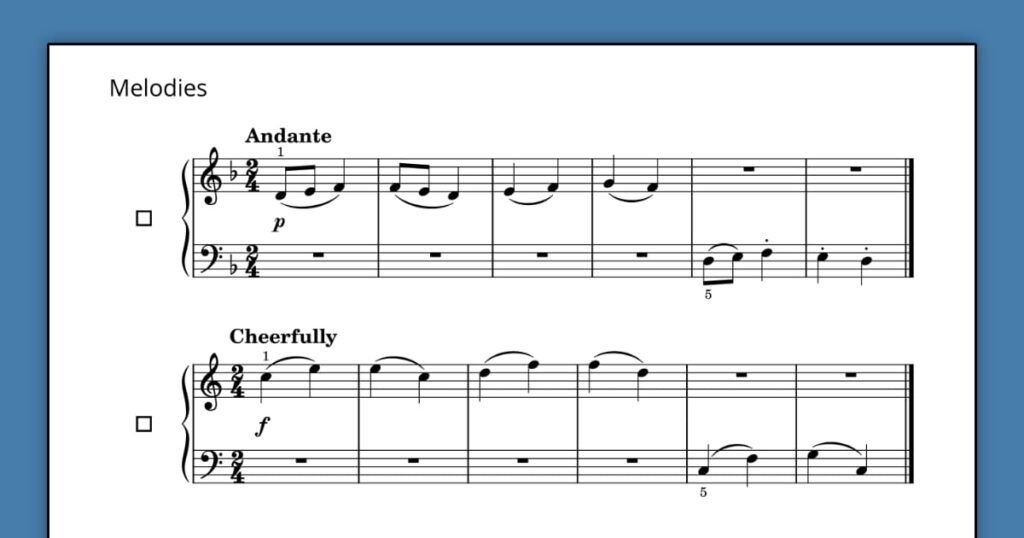
Why sight-reading matters for beginners
Being able to sit at the piano, open a new score, and make music right away might sound like magic, but it’s actually a skill you can train from the very beginning.
Sight-reading (reading a piece for the first time while playing) builds fluency, helps you learn pieces faster, and gives you confidence to explore more music on your own. Here, you’ll find tips and free practice sheets to help you get started.
Common challenges
Most students run into the same roadblocks when starting with sight-reading:
- Reading notes one by one, too slowly to keep the music flowing.
- Losing track of the rhythm, even with very simple meters.
- Looking down at the keyboard all the time instead of keeping eyes on the score.
Recognizing these challenges is the first step to overcoming them.
Basic practice tips to improve
The good news: progress comes from small, consistent steps. Try these simple habits:
- Play every day: even just 5 minutes of reading something new.
- Rhythm is more important than pitch. If you play the right notes but the rhythm is wrong, the piece will be unrecognizable. But if your rhythm is accurate and you miss a few notes here and there, chances are nobody will notice.
- Don’t stop for mistakes: keep a steady tempo and move forward.
- Start easy: use exercises with limited notes and clear rhythms before tackling more complex music.
Before you play
- Check time signature: decide the beat and how you’ll count it.
- Note the key signature: spot sharps/flats before you play.
- Scan for patterns (scales, chords, sequences).
- Decide on hand position and fingering.
- Notice important dynamics and articulations.
- Always count in before starting.
While playing
- Keep a steady pulse.
- Don’t stop for mistakes; keep going.
- Read ahead of where you’re playing.
- Stay relaxed in your hand position.
- Aim to play with musical character, not just correct notes.
Think of it like reading a book in a new language: fluency comes with repetition and exposure, not with perfection. Even if you’ve only been playing for a few months, short daily practice sessions can set strong foundations.
Recommended exercises to get started
Here are three types of beginner-friendly exercises that really work:
- Clap the rhythm first: before playing, read a few bars and clap or tap the beat. This trains your inner sense of time.
- Play five-finger melodies: keep both hands in a fixed position (C to G, for example) and read simple lines in treble and bass clefs.
- Alternate hands: short patterns that switch between left and right hand, keeping things simple but challenging your coordination.
The focus is not on difficulty, but on building comfort with “reading and moving” at the same time.
Free resources to practice
To make it easier, I’ve created a set of printable practice sheets you can download for free. They include:
- Rhythm exercises: can be clapped or tapped along.
- Melodic lines in both treble and bass clefs. Playing both hands separately.
Please note that these exercises are intended for absolute beginners with little to no prior experience. The point is to show the type of practice you should do to improve your sight-reading: don’t forget to practice rhythm reading, not just melodic exercises.
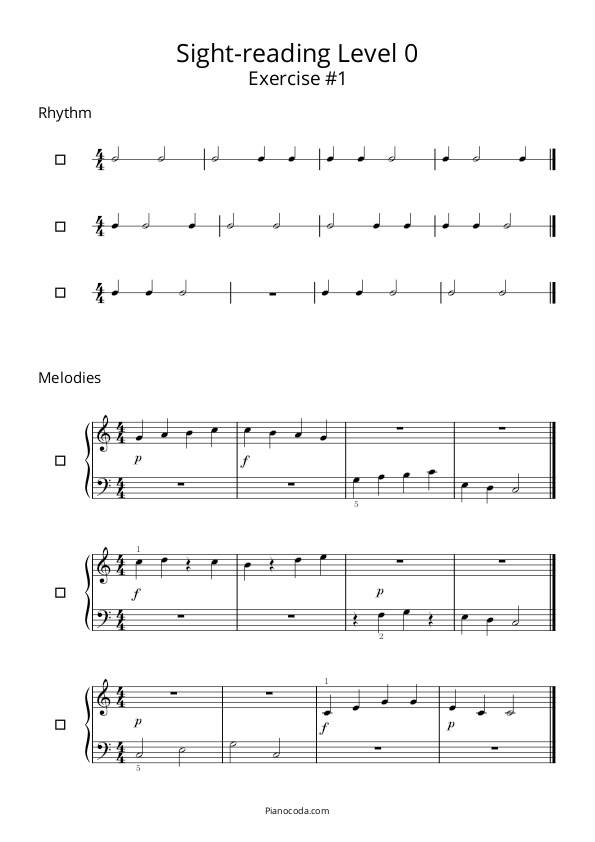
Exercise #1
Rhythm exercises:
Melodies:
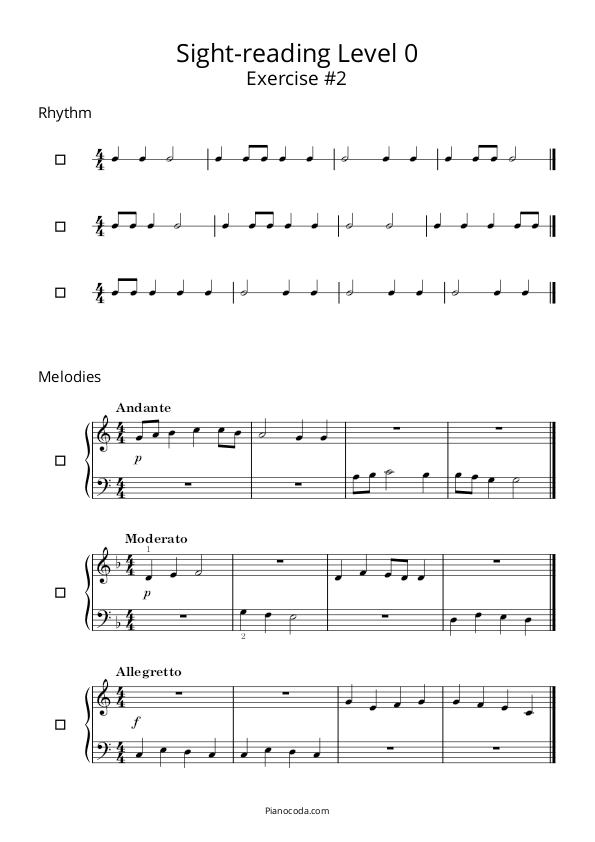
Exercise #2
Rhythm exercises:
Melodies:
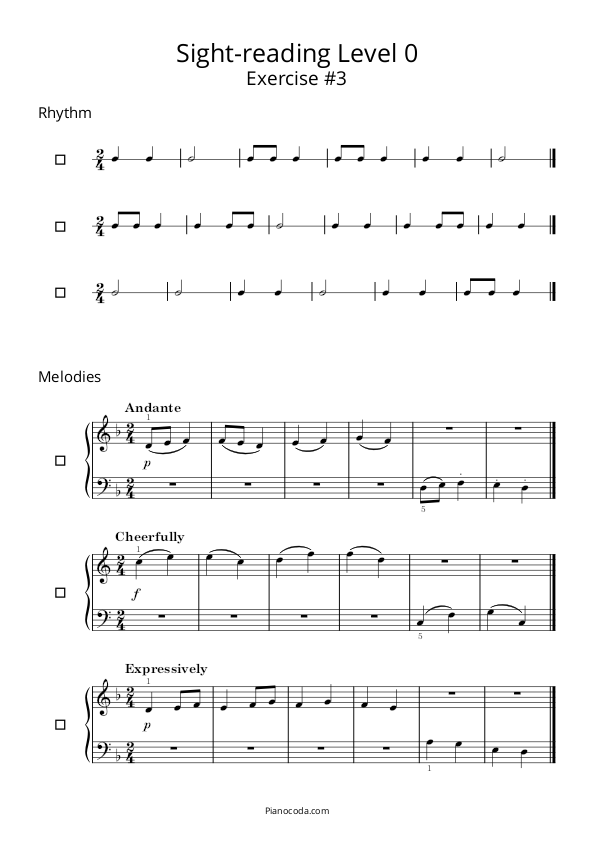
Exercise #3
Rhythm exercises:
Melodies: